

CIRCULAR CONSTRUCTION
Turning demolition into future building value
In Belgium’s dense urban environment, every redevelopment project starts with an important question: what value is already present in the existing building?
Circular construction helps retain that value. Instead of treating demolition materials as waste, we identify, test, recover and reintegrate them into new construction projects wherever technically, economically and legally possible. This reduces the need for primary raw materials, limits transport and waste volumes, lowers environmental impact and creates more resilient project planning.
Urban mining is at the heart of this approach. Existing buildings become material banks: sources of concrete, glass, metals, façade elements and other resources that can be reused, recycled or upcycled into high-quality applications.
For developers, investors, public clients and project teams in Belgium, circular construction is no longer only an environmental ambition. It is becoming a practical response to material scarcity, rising construction costs, permit requirements, public tender criteria, carbon reduction targets and changing regional regulations.
Our circular construction approach
-
WE Assess
-
WE Recover
-
WE Test
-

WE Source and connect
-
WE Reintegrate
Combating raw material scarcity with continous cycles
Valuable materials continue to leave projects as waste, instead of being retained as assets within the construction cycle. In doing so, we pay for these materials twice: first when they are purchased, and again when they leave projects for recycling elsewhere, often without being used to their full potential locally.
OUR EXPERTS' SERVICES
We assess the existing building before demolition to identify which materials can be recovered, reused, recycled or upcycled. This includes concrete, glass, façade elements, metals and other valuable construction materials.
Our support includes:
- Material inventories
- Urban mining assessments
- Identification of reuse and recycling potential
- Material flow documentation
- Selective deconstruction strategy
- Support for material passports
High-quality recycling starts with proper separation on site. If materials are mixed, contaminated or removed too late, their circular value is often lost.
We help project teams plan demolition in a way that keeps materials clean, traceable and suitable for their next use.
Our support includes:
- Sorting strategy for demolition waste
- Coordination with demolition contractors
- Separation of material streams
- Logistics planning on dense urban sites
- Waste reduction concepts
- Quality control during demolition
Concrete is often crushed and reused as gravel for roads or other low-grade applications. We help clients go further.
Where technically feasible, we support the upcycling of concrete so that recycled aggregates can be used again in high-quality concrete for new buildings, including on-site reuse.
Our support includes:
- Recovery of concrete from demolition
- Lab tests for contamination and performance
- Coordination with concrete producers
- Assessment of local recycling possibilities
- Support for audits, certification and insurance requirements
- Use of recycled concrete in the new building
Glass from demolition is often recycled into bottles or lower-value applications. Façade elements are also difficult to reuse because they are usually tailor-made for one specific building.
However, with the right planning, clean separation and industrial partners, glass can be recovered and upcycled into high-quality new glass for windows and façades.
Our support includes:
- Recovery of glass and façade elements
- Assessment of technical reuse potential
- Clean separation of float glass
- Coordination with glass manufacturers
- Logistics planning and site coordination
- Evaluation of carbon, energy and raw material savings
Circular construction needs to be safe, compliant and well documented. This is especially important for public tenders, permit applications and regulatory requirements in Belgium.
We coordinate the necessary research and documentation to support decision-making and approval processes.
Our support includes:
- Lab tests for material contamination
- Soil contamination-related assessments
- Technical feasibility studies
- Documentation for permits
- Research for public tenders
- Circularity and environmental reporting
- Life Cycle Assessment and CO₂ assessment
Circular construction depends on the right partners. We connect recovered materials with local recycling, upcycling and manufacturing opportunities.
Thanks to our network, we support clients in finding technically suitable and certified solutions with recycled content.
Our support includes:
- Circular procurement support
- Local recycling and upcycling routes
- Coordination with manufacturers
- Certified products with recycled content
- Cradle to Cradle®-inspired material expertise
- Access to EPEA – Part of Drees & Sommer expertise
Circularity only works when it is integrated into planning, demolition, procurement and construction from the beginning.
We manage the full process, helping clients reduce complexity, improve planning and avoid unnecessary costs.
Our support includes:
- Full-scope deconstruction management
- Coordination between stakeholders
- Integration of recovered materials into the new design
- Cost and schedule optimization
- Risk reduction
- Implementation support on site
ZIN
Our Groundbreaking Project
The redevelopment of the former WTC 1 and 2 towers into ZIN is one of Belgium’s most prominent examples of circular transformation at scale.
For this landmark project, Drees & Sommer developed the circular economy concept that turned the existing buildings into a valuable material resource. Instead of allowing materials to leave the site as conventional demolition waste, the concept defined how they could be recovered, assessed and redirected into high-value reuse and upcycling routes.
The result: 71,646 tonnes of material were retained in the construction cycle, including concrete, flat glass and aluminium.
ZIN proves that circular construction is not a limitation on design ambition. On the contrary, it can become an enabler of resilient, resource-conscious and future-ready real estate. The project combines architectural transformation with measurable material recovery — showing how the built environment can evolve without discarding the value already embedded in existing assets.
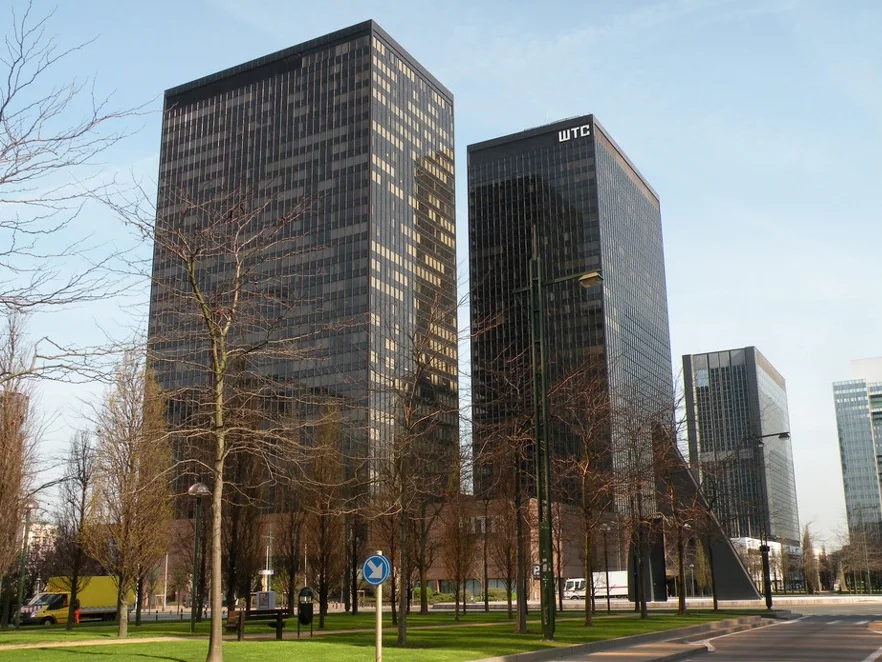 © Befimmo/Jaspers-Eyers/51N4E/L'AUC
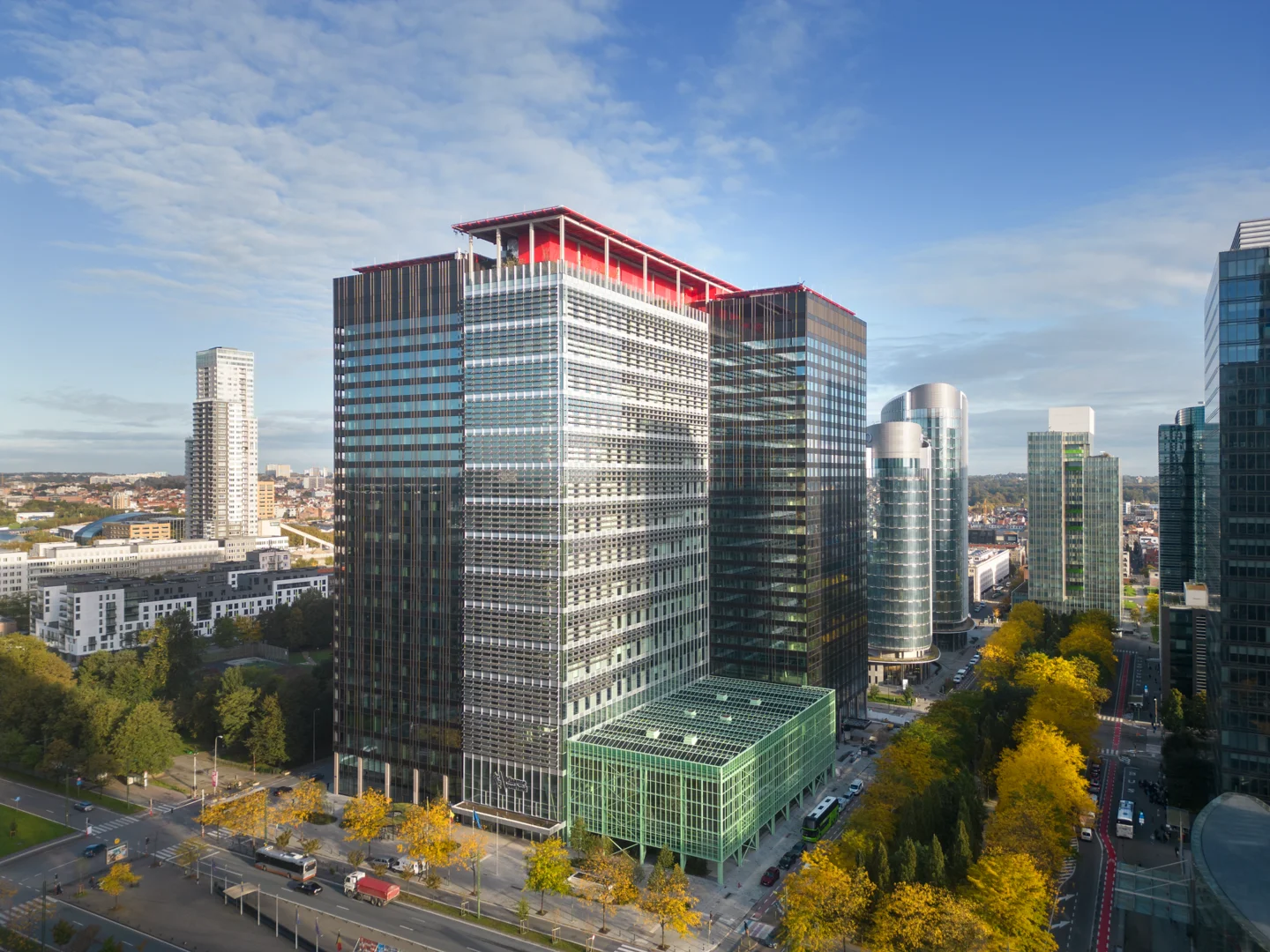 © Befimmo/Jaspers-Eyers/51N4E/L'AUC
CRADLE TO CRADLE CONCEPT
The Cradle to Cradle® concept (C2C) codeveloped by the German chemist Michael Braungart and architect William McDonough describes the principle of two continuous cycles (circular economy). Nondurable consumer goods are biodegradable and return to the natural nutrient cycle. Durable consumer goods are broken down into separate raw materials after use and returned to a technical cycle. Material quality is retained, so downcycling is avoided. All ingredients are chemically safe and recyclable. There is no waste in the conventional sense – only reusable nutrients.
As the link between investors, architects and product manufacturers, Drees & Sommer provides clients with the opportunity to adopt innovations in design, construction and operation. At the same time, we offer extensive security that the value of their property will be maintained in the medium and long term.
EPEA GmbH – Part of Drees & Sommer
Since 2019, EPEA has been part of Drees & Sommer, strengthening our in-house capabilities in circular economy, material assessment and Cradle to Cradle® design principles. With deep expertise in material health, recyclability and product optimization, EPEA enables us to evaluate materials from the molecular to the modular level and support clients in developing healthier, circular and economically viable solutions. This integrated expertise allows Drees & Sommer to combine strategic consulting, planning and implementation with scientifically grounded material know-how — all from within our own group, ensuring efficiency and accountability.

