News and Insights

Welcome to our Shared Content Center! This is where you will find news, current developments and interesting stories about our company and the topics that keep driving us forward. We share information here, about our projects, innovations and events, in a variety of formats, such as blog posts, press releases and files. If you want to keep yourself updated, you're in the right place. 

News

Latest First: In our news articles, you’ll find everything we currently have to report.

Press

Record Speed for the Riedbahn Project: Mammoth Task Completed in just Five Months

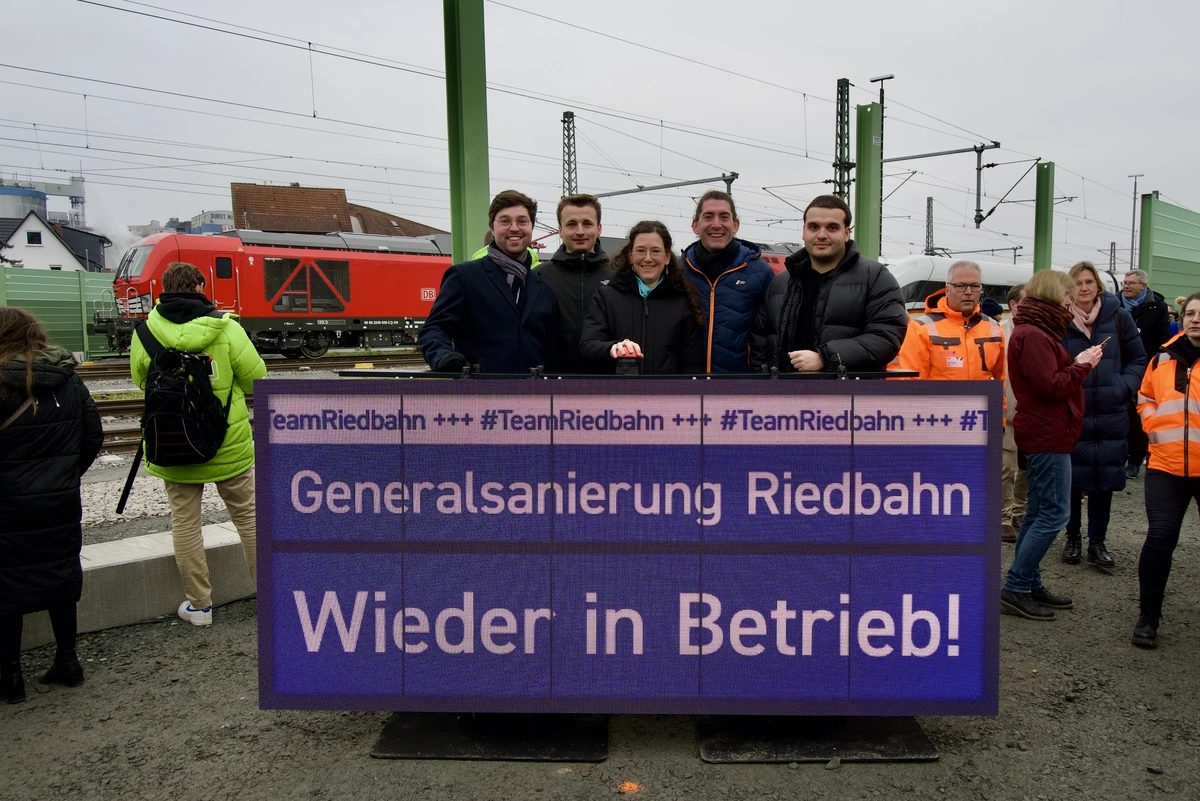
A multidisciplinary team of experts from Drees & Sommer supported Deutsche Bahn and participated in the renovation of the entire technical infrastructure and modernization of 20 stations along the section. “As the line was completely closed, sticking to deadlines was the top priority for this project. By continuously reviewing, adapting and improving the ongoing processes during the planning and construction phases, it was possible to ensure quality and a good time management, and to exclude waiting times,“ explained Drees & Sommer team head Annette Beierl. (Picture: Drees & Sommer expert team, from left to right: Fabian Esslinger (project head), Julian Eitel (project manager), Annette Beierl (team head), Felix Demuth (project head), and Felice Pavlidis (junior project manager) © Drees & Sommer SE
Deutsche Bahn plans to renew and modernize a total of 1,500 kilometers of track following the model of the Riedbahn route. ©Deutsche Bahn AG

Frankfurt am Main/Stuttgart (Germany), Dezember 17, 2024. 20 railroad stations modernized; 111 kilometers of track renewed; 152 switches replaced; 130 kilometers of overhead lines reconditioned; 1,200 control and safety systems brought up to date – and all in just five months. The general overhaul of the Riedbahn, the busy railroad line between Frankfurt am Main and Mannheim, was a mammoth project that has been completed at record speed. Trains have been running on the line again since the weekend, and now the official inauguration of the completely upgraded railroad line has been celebrated. Deutsche Bahn CEO Dr. Richard Lutz, the Federal Minister for Transport Volker Wissing and representatives of the German federal states of Baden-Wuerttemberg and Hesse symbolically reopened the route at a completion event in Gernsheim on Saturday. Drees & Sommer SE, a company which specializes in infrastructure, construction and real estate consulting, supported Deutsche Bahn with a broad range of services in the route overhaul project. 

Whether tracks or switches, signals or noise barriers, contact wires or overhead lines: all construction work along the Riedbahn line was completed on schedule. The section was reopened for long-distance, regional and freight transport on December 14. The first train that ran on the tracks as scheduled on the night of December 15 was a freight train. 

Strong Team Performance Ensures Operational Stability

“Conclusion of the first complete overhaul is an important step towards the structural modernization of our infrastructure. 

Within just five months, we have completely renovated the fault-prone Riedbahn as a strong team effort together with our construction partners, and supported by an unprecedented political will. New tracks, switches, signals and railroad control technology will ensure stable operation on this busy line in future. Passengers will benefit from modern and attractive stations of the future," said Dr. Richard Lutz, Chairperson of the Management Board of Deutsche Bahn AG. The Riedbahn is a prestige project of Deutsche Bahn. Following the example of this refurbishment, 41 heavily-used lines are to be completely overhauled in the coming years. 

The Riedbahn between Frankfurt am Main and Mannheim was put into service in the middle of the 19th century. More than 300 trains passed through this section of track every day until the line was closed in July, according to Deutsche Bahn, making it one of the busiest rail corridors in Germany. Due to this heavy use, the systems were increasingly prone to malfunction. This had repeatedly led to a nationwide impact on rail transport. The aim of the general overhaul was to increase reliability on this transport route. 

Annette Beierl, team head at Drees & Sommer, commented: “This was a pilot project because, instead of lengthy modernization during ongoing operations, the line was completely closed, including the affected stations along the route. It was then completely overhauled in record time. As the line was completely closed, sticking to deadlines was the top priority for this project." As part of the entire renovation project, a total of 1,500 kilometers of track in Deutsche Bahn's heavily used network are to be renewed and modernized by 2027, using this model. After all, the massive renovation backlog in the German rail network needs to be reduced quickly. The complete overhaul is a fundamental component of the overall S3 program, with which DB is overhauling not only the infrastructure but also the operations and profitability of the Group over the next three years. The next large-scale project is the modernization of the Hamburg-Berlin route.

Lean Construction Management Ensures Efficient Processes

Drees & Sommer’s specialists supported the Riedbahn project with their expertise in several areas, including the provision of project and contract management, and project control and schedule monitoring services. A multidisciplinary team of experts worked together to ensure the renovation of the entire technical infrastructure and modernization of 20 stations along the section. In addition[MC1] , Drees & Sommer SE was involved in the renovation and modernization of numerous signal boxes of the Riedbahn route at the beginning of 2020. The aim of the measures was to improve the operating quality of the systems and ensure their operational availability. To achieve this, the existing signal boxes on the section between Lampertheim and Walldorf were replaced by electronic systems at seven locations, and the continuous train control equipment was also replaced by the European Train Control System (ETCS) Level 2 (with signals). The construction of ETCS represents an essential component of the future standardized European rail transport management system. This modernization work had been completed by the start of the year.

The coordination of this large-scale project was based on lean management and lean construction management, a holistic and integrated method for developing projects. “By continuously reviewing, adapting and improving the ongoing processes during the planning and construction phases, it was possible to ensure efficiency, quality and a good time management and to avoid any kind of waste, overproduction or waiting times,“ pointed out Drees & Sommer team head Annette Beierl. Lean management is particularly useful in such a short timeline with the clear objective, right from the start, of putting the line back into operation by mid-December. This is because it allows problems to be identified at an early stage and faults rectified – and with the shortest possible communication channels. After all, construction also means responding to the unforeseen – this works particularly efficiently with the aid of lean management.

Forward-Looking Planning with Digital Steering Tools

Forward-looking planning was also essential for logistics in order to ensure that all components were in the right place at the right time, even in these times of materials and resources shortages and unstable global supply chains. “The comprehensive planning made it possible to make a distinction between standard products and custom-made products at an early stage, and to start production accordingly so that the materials could be delivered to the right place at the right time,“ explained Drees & Sommer team head Annette Beierl and continued: “This also included bringing forward certain measures and revising and adapting the plans at short notice in order to meet the specified timeframe for the construction work.“ The head of team added that the lean construction management approach was all the more important in this case: it was not only used at the start of the project, but continuously throughout the entire project cycle.

"The biggest challenge was the large amount of construction work that had to be implemented within the short timeframe," reported team head Annette Beierl. Many digital steering instruments played a major role in the management of the large-scale project. So it was particularly important to make relevant information available to everyone in the project quickly and promptly. A digital planning system was used for this purpose. Data exchange happened via Share Point; the collaborative documentation tool Confluence and the Jira application served as planning instruments for the recording of meetings and tracking of tasks. Camera surveillance, drones and a tracker-monitored vehicle control system were used for operational steering in the various phases of construction. 

Combining of all the construction work within the five-month timeframe now ensures that the section of line will not have to endure construction sites for years to come. In this section of the railroad, which has a particularly high level of traffic, this is especially important because it is a major European transport corridor. 

In addition to local and long-distance passenger traffic, European freight transport is also dependent on it. After all, functioning railroad infrastructure is a key element of the European Green Deal, which envisages a modal shift from road to rail as a key objective of EU climate policy. For example, it is said that rail is up to 28 times more climate-friendly than air travel, over six times more energy-efficient than trucks, and four times more energy-efficient than cars. 

More News

Blog posts

Get new insights into the work of Drees & Sommer and learn more about current topics, projects and trends.

Press

Record Speed for the Riedbahn Project: Mammoth Task Completed in just Five Months

A multidisciplinary team of experts from Drees & Sommer supported Deutsche Bahn and participated in the renovation of the entire technical infrastructure and modernization of 20 stations along the section. “As the line was completely closed, sticking to deadlines was the top priority for this project. By continuously reviewing, adapting and improving the ongoing processes during the planning and construction phases, it was possible to ensure quality and a good time management, and to exclude waiting times,“ explained Drees & Sommer team head Annette Beierl. (Picture: Drees & Sommer expert team, from left to right: Fabian Esslinger (project head), Julian Eitel (project manager), Annette Beierl (team head), Felix Demuth (project head), and Felice Pavlidis (junior project manager) © Drees & Sommer SE
Deutsche Bahn plans to renew and modernize a total of 1,500 kilometers of track following the model of the Riedbahn route. ©Deutsche Bahn AG

Frankfurt am Main/Stuttgart (Germany), Dezember 17, 2024. 20 railroad stations modernized; 111 kilometers of track renewed; 152 switches replaced; 130 kilometers of overhead lines reconditioned; 1,200 control and safety systems brought up to date – and all in just five months. The general overhaul of the Riedbahn, the busy railroad line between Frankfurt am Main and Mannheim, was a mammoth project that has been completed at record speed. Trains have been running on the line again since the weekend, and now the official inauguration of the completely upgraded railroad line has been celebrated. Deutsche Bahn CEO Dr. Richard Lutz, the Federal Minister for Transport Volker Wissing and representatives of the German federal states of Baden-Wuerttemberg and Hesse symbolically reopened the route at a completion event in Gernsheim on Saturday. Drees & Sommer SE, a company which specializes in infrastructure, construction and real estate consulting, supported Deutsche Bahn with a broad range of services in the route overhaul project. 

Whether tracks or switches, signals or noise barriers, contact wires or overhead lines: all construction work along the Riedbahn line was completed on schedule. The section was reopened for long-distance, regional and freight transport on December 14. The first train that ran on the tracks as scheduled on the night of December 15 was a freight train. 

Strong Team Performance Ensures Operational Stability

“Conclusion of the first complete overhaul is an important step towards the structural modernization of our infrastructure. 

Within just five months, we have completely renovated the fault-prone Riedbahn as a strong team effort together with our construction partners, and supported by an unprecedented political will. New tracks, switches, signals and railroad control technology will ensure stable operation on this busy line in future. Passengers will benefit from modern and attractive stations of the future," said Dr. Richard Lutz, Chairperson of the Management Board of Deutsche Bahn AG. The Riedbahn is a prestige project of Deutsche Bahn. Following the example of this refurbishment, 41 heavily-used lines are to be completely overhauled in the coming years. 

The Riedbahn between Frankfurt am Main and Mannheim was put into service in the middle of the 19th century. More than 300 trains passed through this section of track every day until the line was closed in July, according to Deutsche Bahn, making it one of the busiest rail corridors in Germany. Due to this heavy use, the systems were increasingly prone to malfunction. This had repeatedly led to a nationwide impact on rail transport. The aim of the general overhaul was to increase reliability on this transport route. 

Annette Beierl, team head at Drees & Sommer, commented: “This was a pilot project because, instead of lengthy modernization during ongoing operations, the line was completely closed, including the affected stations along the route. It was then completely overhauled in record time. As the line was completely closed, sticking to deadlines was the top priority for this project." As part of the entire renovation project, a total of 1,500 kilometers of track in Deutsche Bahn's heavily used network are to be renewed and modernized by 2027, using this model. After all, the massive renovation backlog in the German rail network needs to be reduced quickly. The complete overhaul is a fundamental component of the overall S3 program, with which DB is overhauling not only the infrastructure but also the operations and profitability of the Group over the next three years. The next large-scale project is the modernization of the Hamburg-Berlin route.

Lean Construction Management Ensures Efficient Processes

Drees & Sommer’s specialists supported the Riedbahn project with their expertise in several areas, including the provision of project and contract management, and project control and schedule monitoring services. A multidisciplinary team of experts worked together to ensure the renovation of the entire technical infrastructure and modernization of 20 stations along the section. In addition[MC1] , Drees & Sommer SE was involved in the renovation and modernization of numerous signal boxes of the Riedbahn route at the beginning of 2020. The aim of the measures was to improve the operating quality of the systems and ensure their operational availability. To achieve this, the existing signal boxes on the section between Lampertheim and Walldorf were replaced by electronic systems at seven locations, and the continuous train control equipment was also replaced by the European Train Control System (ETCS) Level 2 (with signals). The construction of ETCS represents an essential component of the future standardized European rail transport management system. This modernization work had been completed by the start of the year.

The coordination of this large-scale project was based on lean management and lean construction management, a holistic and integrated method for developing projects. “By continuously reviewing, adapting and improving the ongoing processes during the planning and construction phases, it was possible to ensure efficiency, quality and a good time management and to avoid any kind of waste, overproduction or waiting times,“ pointed out Drees & Sommer team head Annette Beierl. Lean management is particularly useful in such a short timeline with the clear objective, right from the start, of putting the line back into operation by mid-December. This is because it allows problems to be identified at an early stage and faults rectified – and with the shortest possible communication channels. After all, construction also means responding to the unforeseen – this works particularly efficiently with the aid of lean management.

Forward-Looking Planning with Digital Steering Tools

Forward-looking planning was also essential for logistics in order to ensure that all components were in the right place at the right time, even in these times of materials and resources shortages and unstable global supply chains. “The comprehensive planning made it possible to make a distinction between standard products and custom-made products at an early stage, and to start production accordingly so that the materials could be delivered to the right place at the right time,“ explained Drees & Sommer team head Annette Beierl and continued: “This also included bringing forward certain measures and revising and adapting the plans at short notice in order to meet the specified timeframe for the construction work.“ The head of team added that the lean construction management approach was all the more important in this case: it was not only used at the start of the project, but continuously throughout the entire project cycle.

"The biggest challenge was the large amount of construction work that had to be implemented within the short timeframe," reported team head Annette Beierl. Many digital steering instruments played a major role in the management of the large-scale project. So it was particularly important to make relevant information available to everyone in the project quickly and promptly. A digital planning system was used for this purpose. Data exchange happened via Share Point; the collaborative documentation tool Confluence and the Jira application served as planning instruments for the recording of meetings and tracking of tasks. Camera surveillance, drones and a tracker-monitored vehicle control system were used for operational steering in the various phases of construction. 

Combining of all the construction work within the five-month timeframe now ensures that the section of line will not have to endure construction sites for years to come. In this section of the railroad, which has a particularly high level of traffic, this is especially important because it is a major European transport corridor. 

In addition to local and long-distance passenger traffic, European freight transport is also dependent on it. After all, functioning railroad infrastructure is a key element of the European Green Deal, which envisages a modal shift from road to rail as a key objective of EU climate policy. For example, it is said that rail is up to 28 times more climate-friendly than air travel, over six times more energy-efficient than trucks, and four times more energy-efficient than cars. 

Dreso-Blog

Press Releases

Find out more about the latest developments and exciting news from our company in our current press releases.

Press

Record Speed for the Riedbahn Project: Mammoth Task Completed in just Five Months

A multidisciplinary team of experts from Drees & Sommer supported Deutsche Bahn and participated in the renovation of the entire technical infrastructure and modernization of 20 stations along the section. “As the line was completely closed, sticking to deadlines was the top priority for this project. By continuously reviewing, adapting and improving the ongoing processes during the planning and construction phases, it was possible to ensure quality and a good time management, and to exclude waiting times,“ explained Drees & Sommer team head Annette Beierl. (Picture: Drees & Sommer expert team, from left to right: Fabian Esslinger (project head), Julian Eitel (project manager), Annette Beierl (team head), Felix Demuth (project head), and Felice Pavlidis (junior project manager) © Drees & Sommer SE
Deutsche Bahn plans to renew and modernize a total of 1,500 kilometers of track following the model of the Riedbahn route. ©Deutsche Bahn AG

Frankfurt am Main/Stuttgart (Germany), Dezember 17, 2024. 20 railroad stations modernized; 111 kilometers of track renewed; 152 switches replaced; 130 kilometers of overhead lines reconditioned; 1,200 control and safety systems brought up to date – and all in just five months. The general overhaul of the Riedbahn, the busy railroad line between Frankfurt am Main and Mannheim, was a mammoth project that has been completed at record speed. Trains have been running on the line again since the weekend, and now the official inauguration of the completely upgraded railroad line has been celebrated. Deutsche Bahn CEO Dr. Richard Lutz, the Federal Minister for Transport Volker Wissing and representatives of the German federal states of Baden-Wuerttemberg and Hesse symbolically reopened the route at a completion event in Gernsheim on Saturday. Drees & Sommer SE, a company which specializes in infrastructure, construction and real estate consulting, supported Deutsche Bahn with a broad range of services in the route overhaul project. 

Whether tracks or switches, signals or noise barriers, contact wires or overhead lines: all construction work along the Riedbahn line was completed on schedule. The section was reopened for long-distance, regional and freight transport on December 14. The first train that ran on the tracks as scheduled on the night of December 15 was a freight train. 

Strong Team Performance Ensures Operational Stability

“Conclusion of the first complete overhaul is an important step towards the structural modernization of our infrastructure. 

Within just five months, we have completely renovated the fault-prone Riedbahn as a strong team effort together with our construction partners, and supported by an unprecedented political will. New tracks, switches, signals and railroad control technology will ensure stable operation on this busy line in future. Passengers will benefit from modern and attractive stations of the future," said Dr. Richard Lutz, Chairperson of the Management Board of Deutsche Bahn AG. The Riedbahn is a prestige project of Deutsche Bahn. Following the example of this refurbishment, 41 heavily-used lines are to be completely overhauled in the coming years. 

The Riedbahn between Frankfurt am Main and Mannheim was put into service in the middle of the 19th century. More than 300 trains passed through this section of track every day until the line was closed in July, according to Deutsche Bahn, making it one of the busiest rail corridors in Germany. Due to this heavy use, the systems were increasingly prone to malfunction. This had repeatedly led to a nationwide impact on rail transport. The aim of the general overhaul was to increase reliability on this transport route. 

Annette Beierl, team head at Drees & Sommer, commented: “This was a pilot project because, instead of lengthy modernization during ongoing operations, the line was completely closed, including the affected stations along the route. It was then completely overhauled in record time. As the line was completely closed, sticking to deadlines was the top priority for this project." As part of the entire renovation project, a total of 1,500 kilometers of track in Deutsche Bahn's heavily used network are to be renewed and modernized by 2027, using this model. After all, the massive renovation backlog in the German rail network needs to be reduced quickly. The complete overhaul is a fundamental component of the overall S3 program, with which DB is overhauling not only the infrastructure but also the operations and profitability of the Group over the next three years. The next large-scale project is the modernization of the Hamburg-Berlin route.

Lean Construction Management Ensures Efficient Processes

Drees & Sommer’s specialists supported the Riedbahn project with their expertise in several areas, including the provision of project and contract management, and project control and schedule monitoring services. A multidisciplinary team of experts worked together to ensure the renovation of the entire technical infrastructure and modernization of 20 stations along the section. In addition[MC1] , Drees & Sommer SE was involved in the renovation and modernization of numerous signal boxes of the Riedbahn route at the beginning of 2020. The aim of the measures was to improve the operating quality of the systems and ensure their operational availability. To achieve this, the existing signal boxes on the section between Lampertheim and Walldorf were replaced by electronic systems at seven locations, and the continuous train control equipment was also replaced by the European Train Control System (ETCS) Level 2 (with signals). The construction of ETCS represents an essential component of the future standardized European rail transport management system. This modernization work had been completed by the start of the year.

The coordination of this large-scale project was based on lean management and lean construction management, a holistic and integrated method for developing projects. “By continuously reviewing, adapting and improving the ongoing processes during the planning and construction phases, it was possible to ensure efficiency, quality and a good time management and to avoid any kind of waste, overproduction or waiting times,“ pointed out Drees & Sommer team head Annette Beierl. Lean management is particularly useful in such a short timeline with the clear objective, right from the start, of putting the line back into operation by mid-December. This is because it allows problems to be identified at an early stage and faults rectified – and with the shortest possible communication channels. After all, construction also means responding to the unforeseen – this works particularly efficiently with the aid of lean management.

Forward-Looking Planning with Digital Steering Tools

Forward-looking planning was also essential for logistics in order to ensure that all components were in the right place at the right time, even in these times of materials and resources shortages and unstable global supply chains. “The comprehensive planning made it possible to make a distinction between standard products and custom-made products at an early stage, and to start production accordingly so that the materials could be delivered to the right place at the right time,“ explained Drees & Sommer team head Annette Beierl and continued: “This also included bringing forward certain measures and revising and adapting the plans at short notice in order to meet the specified timeframe for the construction work.“ The head of team added that the lean construction management approach was all the more important in this case: it was not only used at the start of the project, but continuously throughout the entire project cycle.

"The biggest challenge was the large amount of construction work that had to be implemented within the short timeframe," reported team head Annette Beierl. Many digital steering instruments played a major role in the management of the large-scale project. So it was particularly important to make relevant information available to everyone in the project quickly and promptly. A digital planning system was used for this purpose. Data exchange happened via Share Point; the collaborative documentation tool Confluence and the Jira application served as planning instruments for the recording of meetings and tracking of tasks. Camera surveillance, drones and a tracker-monitored vehicle control system were used for operational steering in the various phases of construction. 

Combining of all the construction work within the five-month timeframe now ensures that the section of line will not have to endure construction sites for years to come. In this section of the railroad, which has a particularly high level of traffic, this is especially important because it is a major European transport corridor. 

In addition to local and long-distance passenger traffic, European freight transport is also dependent on it. After all, functioning railroad infrastructure is a key element of the European Green Deal, which envisages a modal shift from road to rail as a key objective of EU climate policy. For example, it is said that rail is up to 28 times more climate-friendly than air travel, over six times more energy-efficient than trucks, and four times more energy-efficient than cars. 

More Press releases

Social Media Wall

Have you followed us on LinkedIn and Instagram yet? This is where you'll find the content that we've shared most recently on our company channel. 


Current publications

Explore an overview or discover interesting details: Here you can find our latest published material, covering a range of topics.

Sustainability Report 2024

You can download our Sustainability Report 2024 here.

Download

Sustainability Report 2023

Forward-looking sustainability: Drees & Sommer is committed to sustainable corporate development that reconciles long-term economic success with ecological and social goals.      

Download

INNOVATION SCOUTING REPORT

On the trail of innovation: Find out more about the most important technology trends for the construction and real estate industry.

Download

Dossier

The future lies in existing buildings: existing properties offer huge potential not only economically, but also ecologically and functionally.

Download

Futureproofs

Looking back and looking ahead: Drees & Sommer Group business figures, statements and forward-looking topics and projects.

Download

Trend Study 2024

Corporate Real Estate Management - Digitalization and sustainability

Download

Digital Transformation Study

Digital Transformation in the Construction and Real Estate Industry: A Central European Perspective

Download

Drees & Sommer Logo

Download
Teaser Drees & Sommer Logos
Symbol Podcast

BLUE WAVES: The podcast for the world of construction and real estate

This is the Drees & Sommer podcast that explains more about the fascinating world of buildings, infrastructure, industry and urban development. Whether you're an industry insider or just curious about the world around us, Blue Waves provides insights into the real-estate industry for everyone. We discuss the topics that affect all of us.


this way

Events

Drees & Sommer uses various event platforms (real, digital or hybrid) to engage in dialog with customers and business partners.

Learn more
Teaser Event