News and Insights

Welcome to our Shared Content Center! This is where you will find news, current developments and interesting stories about our company and the topics that keep driving us forward. We share information here, about our projects, innovations and events, in a variety of formats, such as blog posts, press releases and files. If you want to keep yourself updated, you're in the right place. 

News

Latest First: In our news articles, you’ll find everything we currently have to report.

Press

Siemens Opens New Research Campus in Garching: 600 People Working on Core Digital Technologies

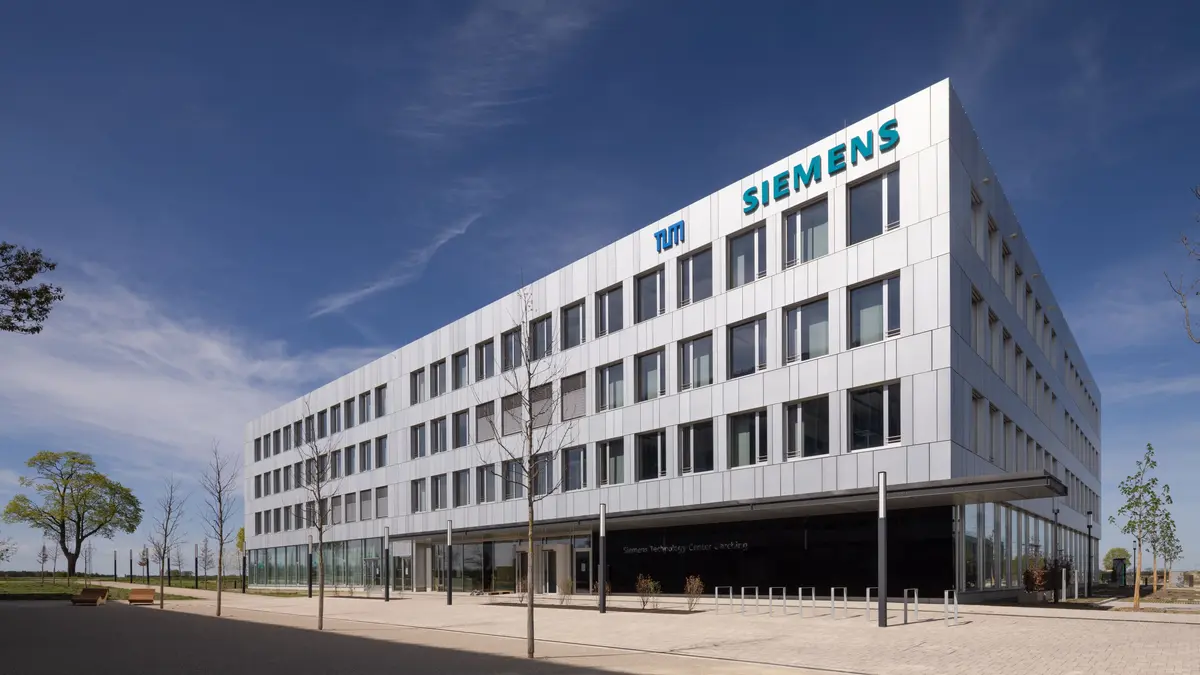
Siemens is investing more than 100 million euros in the Technology Center in Garching. The building complex meets the highest standards of sustainability. © Siemens AG

A high-profile industrial partner, Siemens AG, has recently moved into the research campus in Garching near Munich. On April 17, Siemens opened its new Technology Center in the immediate vicinity of software giant SAP. Together with around 150 employees from the Technical University of Munich (TUM), more than 450 researchers will work on digital solutions at this location. Located in what is referred to as ‘the Isar Valley’ – a leading European tech hub – the campus offers ideal conditions: this is where industrial companies, technology firms, startup entities, Fraunhofer-Gesellschaft (the world's leading applied research organization), and the elite universities Ludwig Maximilian University (LMU) and TUM are bridging the gap between science and business. The construction and real estate consulting company Drees & Sommer supported Siemens in the construction of the Technology Center.

With an area of around 13,000 square meters, the building is based on a functional and variable layout that promotes interaction between employees. In addition to modern workstations and conference zones, there are technical areas and laboratories, a divisible lecture hall and a foyer exhibiting the latest research projects to the public. A special design feature of the complex is that the main staircase in the interior is open across all floors, similar to department stores. As a result, the new build does not require small-scale firewalls and enables separate areas of up to 5,000 square meters to be configured. The building was designed by Nuremberg-based architecture firm JB.

“The new building on the campus provides a high-power ecosystem for innovation. Together with TU Munich, we are focusing on the development of core technologies such as the future of automation, additive manufacturing processes and Industry 4.0.,“ explained Mario Beck, who heads the project at Siemens.

Digital Brain for Buildings

Building Information Modeling (BIM) is to the construction sector what Industry 4.0 is to manufacturing companies: it facilitates digital interaction between processes, products and stakeholders. To put it briefly, the building information modeling approach, or BIM, enables networked collaboration based on the aggregation of all relevant data. Even before the first diggers arrived at the Technology Center construction site, the planning team was able to visualize every door and window, every pipe, every room and every technical area, from the basement to the roof.

Although the digital method initially increases the planning work, it saves time and costs as the project progresses, as Drees & Sommer expert Andreas Feil explains: “In the digital twin, we do not just describe individual elements of the building. We also provide information on the exact dimensions, the material used and its service life or sound insulation. As everyone involved in the construction work is using the same model, all information is available in real time."

Gold for Sustainability

Siemens not only sets a benchmark in digital innovation: the Technology Center will receive a certification of LEED Gold for environmentally friendly design. Leadership in Energy and Environmental Design (LEED) is a globally recognized green building certification program. The smart sensors developed in-house and the energy-saving building technology for lighting contribute to greater sustainability. A photovoltaic system on the roof provides sustainable electricity. Heating is delivered by geothermal district heating from the town of Garching. There are also thermoactive suspended ceilings and ventilation with heat recovery.

For Andreas Feil , Siemens’ concept makes it a role model for other industrial companies with regard to decarbonization: “The heating sector makes up more than half of Germany’s energy demand. Around 85 percent of this heat is still generated from fossil fuels such as coal, oil and gas. In densely populated areas such as Garching, connecting to carbon-neutral local and district heating networks is a very good way of moving away from fossil-fuel heating systems.”

Mario Beck from Siemens comments: “Our objective is clear: all Siemens production facilities and buildings are to reach net zero carbon by 2030. We are investing an additional 650 million euros worldwide for this purpose, a large part of which will be invested in buildings.” This makes the Siemens Technology Center a key component in the international technology group’s strategy to address climate change.

More News

Blog posts

Get new insights into the work of Drees & Sommer and learn more about current topics, projects and trends.

Press

Siemens Opens New Research Campus in Garching: 600 People Working on Core Digital Technologies

Siemens is investing more than 100 million euros in the Technology Center in Garching. The building complex meets the highest standards of sustainability. © Siemens AG

A high-profile industrial partner, Siemens AG, has recently moved into the research campus in Garching near Munich. On April 17, Siemens opened its new Technology Center in the immediate vicinity of software giant SAP. Together with around 150 employees from the Technical University of Munich (TUM), more than 450 researchers will work on digital solutions at this location. Located in what is referred to as ‘the Isar Valley’ – a leading European tech hub – the campus offers ideal conditions: this is where industrial companies, technology firms, startup entities, Fraunhofer-Gesellschaft (the world's leading applied research organization), and the elite universities Ludwig Maximilian University (LMU) and TUM are bridging the gap between science and business. The construction and real estate consulting company Drees & Sommer supported Siemens in the construction of the Technology Center.

With an area of around 13,000 square meters, the building is based on a functional and variable layout that promotes interaction between employees. In addition to modern workstations and conference zones, there are technical areas and laboratories, a divisible lecture hall and a foyer exhibiting the latest research projects to the public. A special design feature of the complex is that the main staircase in the interior is open across all floors, similar to department stores. As a result, the new build does not require small-scale firewalls and enables separate areas of up to 5,000 square meters to be configured. The building was designed by Nuremberg-based architecture firm JB.

“The new building on the campus provides a high-power ecosystem for innovation. Together with TU Munich, we are focusing on the development of core technologies such as the future of automation, additive manufacturing processes and Industry 4.0.,“ explained Mario Beck, who heads the project at Siemens.

Digital Brain for Buildings

Building Information Modeling (BIM) is to the construction sector what Industry 4.0 is to manufacturing companies: it facilitates digital interaction between processes, products and stakeholders. To put it briefly, the building information modeling approach, or BIM, enables networked collaboration based on the aggregation of all relevant data. Even before the first diggers arrived at the Technology Center construction site, the planning team was able to visualize every door and window, every pipe, every room and every technical area, from the basement to the roof.

Although the digital method initially increases the planning work, it saves time and costs as the project progresses, as Drees & Sommer expert Andreas Feil explains: “In the digital twin, we do not just describe individual elements of the building. We also provide information on the exact dimensions, the material used and its service life or sound insulation. As everyone involved in the construction work is using the same model, all information is available in real time."

Gold for Sustainability

Siemens not only sets a benchmark in digital innovation: the Technology Center will receive a certification of LEED Gold for environmentally friendly design. Leadership in Energy and Environmental Design (LEED) is a globally recognized green building certification program. The smart sensors developed in-house and the energy-saving building technology for lighting contribute to greater sustainability. A photovoltaic system on the roof provides sustainable electricity. Heating is delivered by geothermal district heating from the town of Garching. There are also thermoactive suspended ceilings and ventilation with heat recovery.

For Andreas Feil , Siemens’ concept makes it a role model for other industrial companies with regard to decarbonization: “The heating sector makes up more than half of Germany’s energy demand. Around 85 percent of this heat is still generated from fossil fuels such as coal, oil and gas. In densely populated areas such as Garching, connecting to carbon-neutral local and district heating networks is a very good way of moving away from fossil-fuel heating systems.”

Mario Beck from Siemens comments: “Our objective is clear: all Siemens production facilities and buildings are to reach net zero carbon by 2030. We are investing an additional 650 million euros worldwide for this purpose, a large part of which will be invested in buildings.” This makes the Siemens Technology Center a key component in the international technology group’s strategy to address climate change.

Dreso-Blog

Press Releases

Find out more about the latest developments and exciting news from our company in our current press releases.

Press

Siemens Opens New Research Campus in Garching: 600 People Working on Core Digital Technologies

Siemens is investing more than 100 million euros in the Technology Center in Garching. The building complex meets the highest standards of sustainability. © Siemens AG

A high-profile industrial partner, Siemens AG, has recently moved into the research campus in Garching near Munich. On April 17, Siemens opened its new Technology Center in the immediate vicinity of software giant SAP. Together with around 150 employees from the Technical University of Munich (TUM), more than 450 researchers will work on digital solutions at this location. Located in what is referred to as ‘the Isar Valley’ – a leading European tech hub – the campus offers ideal conditions: this is where industrial companies, technology firms, startup entities, Fraunhofer-Gesellschaft (the world's leading applied research organization), and the elite universities Ludwig Maximilian University (LMU) and TUM are bridging the gap between science and business. The construction and real estate consulting company Drees & Sommer supported Siemens in the construction of the Technology Center.

With an area of around 13,000 square meters, the building is based on a functional and variable layout that promotes interaction between employees. In addition to modern workstations and conference zones, there are technical areas and laboratories, a divisible lecture hall and a foyer exhibiting the latest research projects to the public. A special design feature of the complex is that the main staircase in the interior is open across all floors, similar to department stores. As a result, the new build does not require small-scale firewalls and enables separate areas of up to 5,000 square meters to be configured. The building was designed by Nuremberg-based architecture firm JB.

“The new building on the campus provides a high-power ecosystem for innovation. Together with TU Munich, we are focusing on the development of core technologies such as the future of automation, additive manufacturing processes and Industry 4.0.,“ explained Mario Beck, who heads the project at Siemens.

Digital Brain for Buildings

Building Information Modeling (BIM) is to the construction sector what Industry 4.0 is to manufacturing companies: it facilitates digital interaction between processes, products and stakeholders. To put it briefly, the building information modeling approach, or BIM, enables networked collaboration based on the aggregation of all relevant data. Even before the first diggers arrived at the Technology Center construction site, the planning team was able to visualize every door and window, every pipe, every room and every technical area, from the basement to the roof.

Although the digital method initially increases the planning work, it saves time and costs as the project progresses, as Drees & Sommer expert Andreas Feil explains: “In the digital twin, we do not just describe individual elements of the building. We also provide information on the exact dimensions, the material used and its service life or sound insulation. As everyone involved in the construction work is using the same model, all information is available in real time."

Gold for Sustainability

Siemens not only sets a benchmark in digital innovation: the Technology Center will receive a certification of LEED Gold for environmentally friendly design. Leadership in Energy and Environmental Design (LEED) is a globally recognized green building certification program. The smart sensors developed in-house and the energy-saving building technology for lighting contribute to greater sustainability. A photovoltaic system on the roof provides sustainable electricity. Heating is delivered by geothermal district heating from the town of Garching. There are also thermoactive suspended ceilings and ventilation with heat recovery.

For Andreas Feil , Siemens’ concept makes it a role model for other industrial companies with regard to decarbonization: “The heating sector makes up more than half of Germany’s energy demand. Around 85 percent of this heat is still generated from fossil fuels such as coal, oil and gas. In densely populated areas such as Garching, connecting to carbon-neutral local and district heating networks is a very good way of moving away from fossil-fuel heating systems.”

Mario Beck from Siemens comments: “Our objective is clear: all Siemens production facilities and buildings are to reach net zero carbon by 2030. We are investing an additional 650 million euros worldwide for this purpose, a large part of which will be invested in buildings.” This makes the Siemens Technology Center a key component in the international technology group’s strategy to address climate change.

More Press releases

Social Media Wall

Have you followed us on LinkedIn and Instagram yet? This is where you'll find the content that we've shared most recently on our company channel. 


Current publications

Explore an overview or discover interesting details: Here you can find our latest published material, covering a range of topics.

Sustainability Report 2024

You can download our Sustainability Report 2024 here.

Download

Sustainability Report 2023

Forward-looking sustainability: Drees & Sommer is committed to sustainable corporate development that reconciles long-term economic success with ecological and social goals.      

Download

INNOVATION SCOUTING REPORT

On the trail of innovation: Find out more about the most important technology trends for the construction and real estate industry.

Download

Dossier

The future lies in existing buildings: existing properties offer huge potential not only economically, but also ecologically and functionally.

Download

Futureproofs

Looking back and looking ahead: Drees & Sommer Group business figures, statements and forward-looking topics and projects.

Download

Trend Study 2024

Corporate Real Estate Management - Digitalization and sustainability

Download

Digital Transformation Study

Digital Transformation in the Construction and Real Estate Industry: A Central European Perspective

Download

Drees & Sommer Logo

Download
Teaser Drees & Sommer Logos
Symbol Podcast

BLUE WAVES: The podcast for the world of construction and real estate

This is the Drees & Sommer podcast that explains more about the fascinating world of buildings, infrastructure, industry and urban development. Whether you're an industry insider or just curious about the world around us, Blue Waves provides insights into the real-estate industry for everyone. We discuss the topics that affect all of us.


this way

Events

Drees & Sommer uses various event platforms (real, digital or hybrid) to engage in dialog with customers and business partners.

Learn more
Teaser Event