News and Insights

Welcome to our Shared Content Center! This is where you will find news, current developments and interesting stories about our company and the topics that keep driving us forward. We share information here, about our projects, innovations and events, in a variety of formats, such as blog posts, press releases and files. If you want to keep yourself updated, you're in the right place. 

News

Latest First: In our news articles, you’ll find everything we currently have to report.

Blog

Sustainable urban planning

Resilient and Elastic Cities through Mixed Use

© Sebastian Grote – Fotolia.com

We associate our cities with certain spatial characteristics: vibrant downtown areas, adjacent residential neighborhoods with occasional restaurants and cafés, together with clusters of office and commercial buildings. Industrial properties and suburban structures are located in the outlying areas. For us, it is the classic everyday city. 

If we form a specific picture of a fictitious day in the place where we live: what does this day look like for us? In the morning from the apartment to work, then to sports or shopping, and in the evening we meet friends or acquaintances. Of course, this is only a generalized outline of everyday life. But we quickly realize that our lives are very much dominated by mobility. That is a good thing, too, because it creates our diverse cities. 

This makes it essential to develop mobility systems that focus on people as users, instead of cars. Unfortunately, the status quo usually tends to be the opposite. Cities around the world complain about congested roads, polluted air, expensive housing and long commutes. These circumstances are further exacerbated by the strong growth of urban centers. 


Sustainable urban planning: Let's venture it

In the future, cities must deal with the consequences of climate change and continue to develop. Smart cities offer livable alternatives in this respect. Instead of being dependent on fossil fuels, they can meet the challenges of a diverse and mobile urban society. The ‘elastic’ city features flexibility in relation to demographic, digital and environmental changes. 

This requires not only a rethink of mobility systems, but also adjustments to housing strategies, retail structures, urban logistics, energy supply, and urban development. One essential requirement for implementation is often underestimated: the diverse, affordable and resilient mix of uses in neighborhoods and properties, both horizontal and vertical.

‘Let's develop sustainable real estate products. Let's venture it – more mixture!‘ 

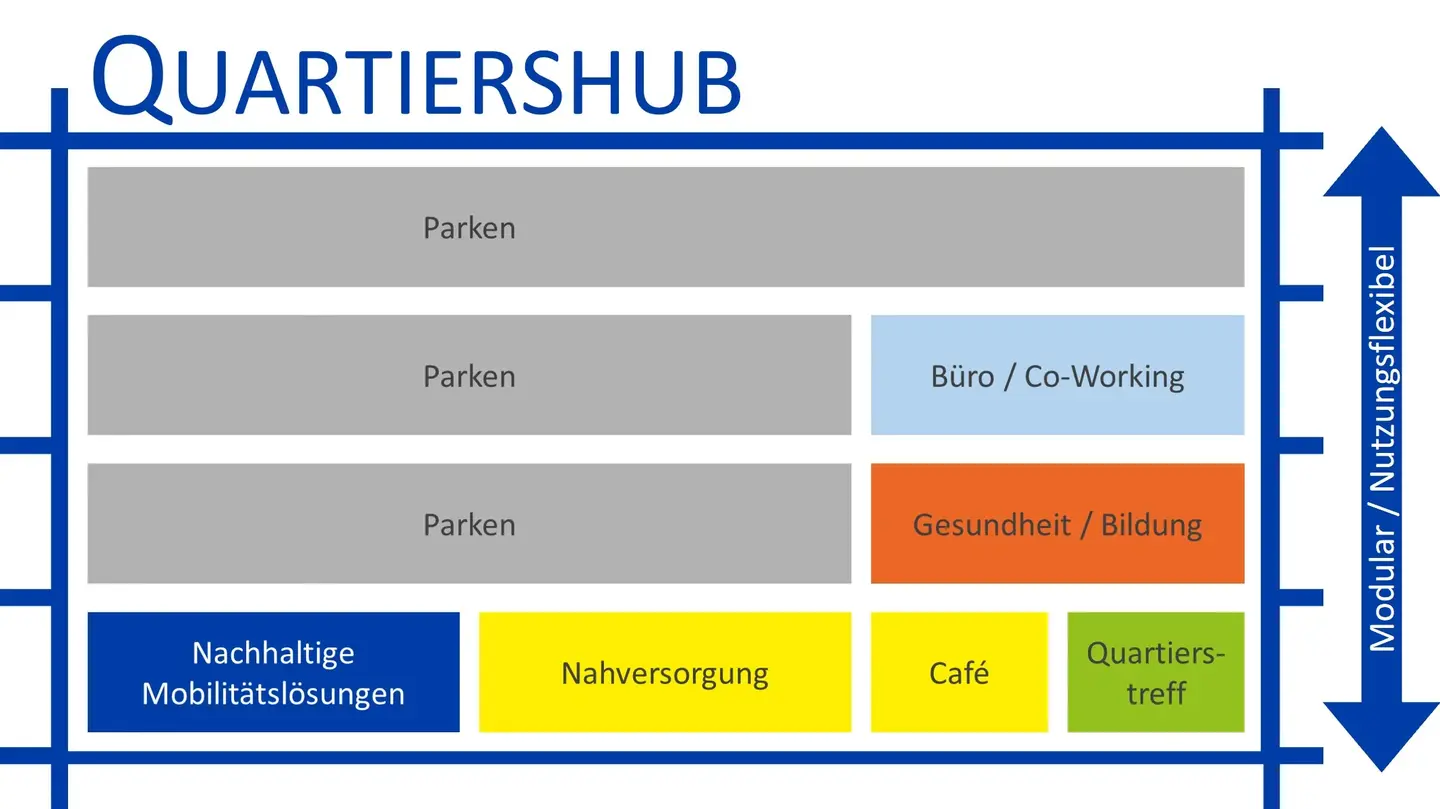
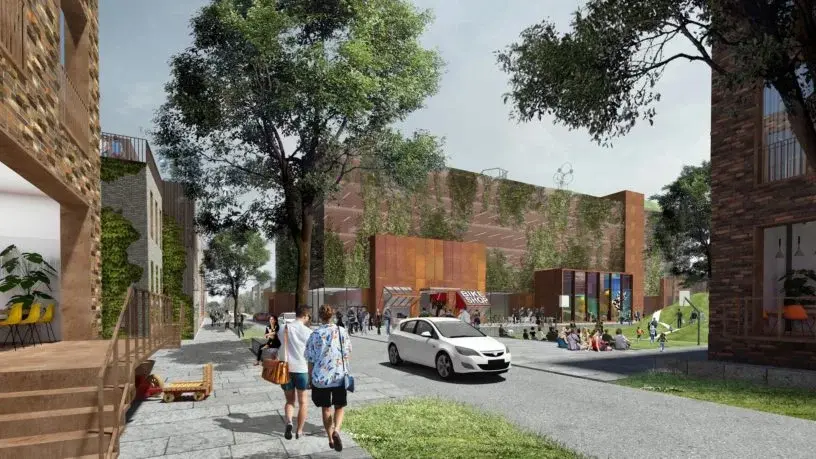
By increasing the proportion of mixed-use structures, experts can create greater resilience for cities. Real estate can thus bring together a range of functions as the focal point of a city: vertically intermixed neighborhood hubs. On the one hand, this reduces traffic flows and local emissions, and on the other, it promotes hyperlocal meeting spaces with social and infrastructural functions. 

Requirement: A shift in the conception of real estate

A clear picture emerges when looking at current property asset classes. The asset classes are dominated by real estate products that are clearly defined in terms of use, with little scope for different uses, both in the construction phase and during the life-cycle. 

Do these clear-cut asset classes measure up to a fundamentally changing society with constantly growing challenges? 

There are limits to the flexibility of existing real estate asset classes when use of the property is considered, despite the advantages, such as market demand that can be determined, proven business models, calculable yield expectations, and structural and architectural fundamentals. 

These limits must be overcome in the interests of sustainable urban development. In order to supplement the existing asset classes with the option mixed-use urban real estate, real-life laboratories and references are needed to test operator models and usage structures for this type of real estate. The attractiveness and potential for investors would thus quickly become apparent. 

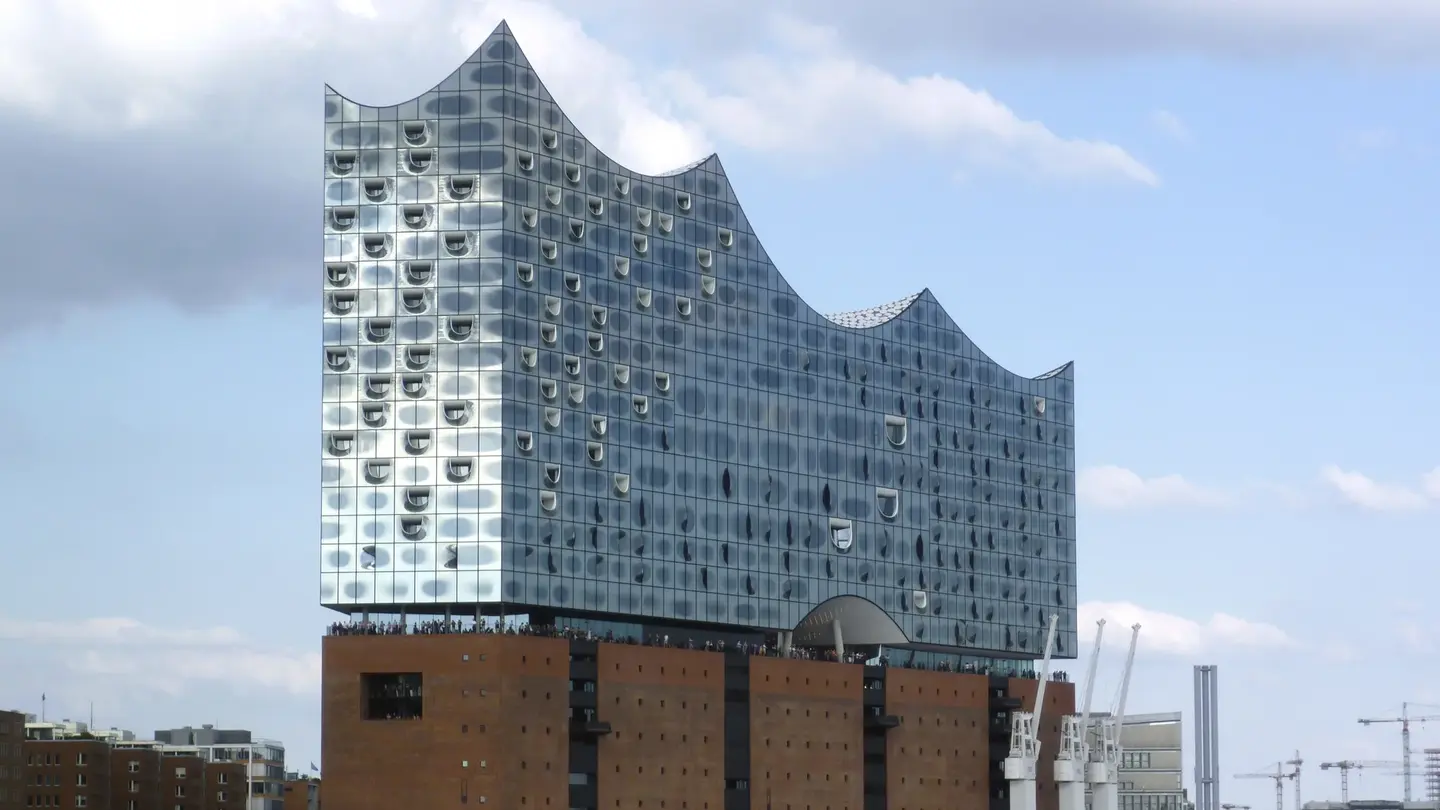
The best-known hybrid building is probably the Elbphilharmonie concert hall in Hamburg. In addition to concert halls and rehearsal rooms, the building houses 45 condominiums, a hotel with 244 rooms, a car park, restaurants, a bar, and even a public viewing platform, the Plaza, at a height of 37 meters. 

One problem, however, is that there are currently no generally applicable recipes for success in implementing mixed use. Ultimately, the Elbphilharmonie concert hall does not represent a universally transferable building. 

There are three basic requirements for mixed-use properties

  1. Suitability of the location: specific requirements for mixed use, based on location and the quality of the surrounding area. 
  2. Key structural-architectural concept including location image: taking into account the provider’s structure and interests, as well as the owner's structures and interests. 
  3. Support for process management: supervision of the entire planning and realization phase, as well as the period of use. 

How, for example, a neighborhood hub can be constructed as a mixed-use property is debatable, with the solution specific to a particular environment. Significant aspects to be derived in this respect include the usage options and building design based on the dimensions of sufficiency, consisting of (1) ‘make better use‘, (2) ‘produce differently‘ and (3) ‘consume less‘. 


3 propositions: potential for resilient and elastic cities

What is certain is that mixed-use urban properties have potential for resilient and elastic cities. 

  1.  Make better use: Cities need change. Mixed-use and modular real estate increases this adaptability. Space can thus be used more resiliently over the entire life-cycle, and can adapt better to society's needs. 
  2. Social interaction: Cities are and will remain places of interaction. Mixed-use properties create interfaces. In addition, social interaction within the district is strengthened by the neighborhood hub's infrastructure for local amenities and community needs. 
  3. Consume less: Cities can save. By combining several usage options within one property, the compact city is created. By pooling resources, the stages of the transport route are reduced, and traffic-related emissions are lowered. 

Sources:

Berding, Nina; Bukow, Wolf-D.; Cudak, Karin (2018): Die kompakte Stadt der Zukunft: Auf dem Weg zu einer inklusiven und nachhaltigen Stadtgesellschaft. Springer VS, Wiesbaden.

Trösser, Susanne (2018): Urbanität auch in Neubaugebieten schaffen: Von der horizontalen zur vertikalen Nutzungsmischung. Reihe: vhw FWS 3, Mai - Juni 2018. Selbstverlag des vhw - Bundesverband für Wohnen und Stadtentwicklung e. V., Berlin. S. 157-159.

Neumann, Tim; Ziesler, Uwe; Teich, Tobias (2020): Kooperation und Innovation für eine nachhaltige Stadtentwicklung: Forschung mit innovativen Kommunen. Springer Fachmedien Wiesbaden GmbH, Wiesbaden.

Forlati, Silvia; Peer, Christian Peer (2017): Mischung: Possible! Wege zur zukunftsfähigen Nutzungsmischung. Selbstverlag der TU Wien, Wien.

Fraunhofer IAO (2022): Fraunhofer IAO Jahresbericht 2021/22 – Zukunft nachhaltig gestalten. Selbstverlag des Fraunhofer-Institut für Arbeitswirtschaft und Organisation IAO, Stuttgart.

Related News

More News

Blog posts

Get new insights into the work of Drees & Sommer and learn more about current topics, projects and trends.

Blog

Sustainable urban planning

Resilient and Elastic Cities through Mixed Use

© Sebastian Grote – Fotolia.com

We associate our cities with certain spatial characteristics: vibrant downtown areas, adjacent residential neighborhoods with occasional restaurants and cafés, together with clusters of office and commercial buildings. Industrial properties and suburban structures are located in the outlying areas. For us, it is the classic everyday city. 

If we form a specific picture of a fictitious day in the place where we live: what does this day look like for us? In the morning from the apartment to work, then to sports or shopping, and in the evening we meet friends or acquaintances. Of course, this is only a generalized outline of everyday life. But we quickly realize that our lives are very much dominated by mobility. That is a good thing, too, because it creates our diverse cities. 

This makes it essential to develop mobility systems that focus on people as users, instead of cars. Unfortunately, the status quo usually tends to be the opposite. Cities around the world complain about congested roads, polluted air, expensive housing and long commutes. These circumstances are further exacerbated by the strong growth of urban centers. 


Sustainable urban planning: Let's venture it

In the future, cities must deal with the consequences of climate change and continue to develop. Smart cities offer livable alternatives in this respect. Instead of being dependent on fossil fuels, they can meet the challenges of a diverse and mobile urban society. The ‘elastic’ city features flexibility in relation to demographic, digital and environmental changes. 

This requires not only a rethink of mobility systems, but also adjustments to housing strategies, retail structures, urban logistics, energy supply, and urban development. One essential requirement for implementation is often underestimated: the diverse, affordable and resilient mix of uses in neighborhoods and properties, both horizontal and vertical.

‘Let's develop sustainable real estate products. Let's venture it – more mixture!‘ 

By increasing the proportion of mixed-use structures, experts can create greater resilience for cities. Real estate can thus bring together a range of functions as the focal point of a city: vertically intermixed neighborhood hubs. On the one hand, this reduces traffic flows and local emissions, and on the other, it promotes hyperlocal meeting spaces with social and infrastructural functions. 

Requirement: A shift in the conception of real estate

A clear picture emerges when looking at current property asset classes. The asset classes are dominated by real estate products that are clearly defined in terms of use, with little scope for different uses, both in the construction phase and during the life-cycle. 

Do these clear-cut asset classes measure up to a fundamentally changing society with constantly growing challenges? 

There are limits to the flexibility of existing real estate asset classes when use of the property is considered, despite the advantages, such as market demand that can be determined, proven business models, calculable yield expectations, and structural and architectural fundamentals. 

These limits must be overcome in the interests of sustainable urban development. In order to supplement the existing asset classes with the option mixed-use urban real estate, real-life laboratories and references are needed to test operator models and usage structures for this type of real estate. The attractiveness and potential for investors would thus quickly become apparent. 

The best-known hybrid building is probably the Elbphilharmonie concert hall in Hamburg. In addition to concert halls and rehearsal rooms, the building houses 45 condominiums, a hotel with 244 rooms, a car park, restaurants, a bar, and even a public viewing platform, the Plaza, at a height of 37 meters. 

One problem, however, is that there are currently no generally applicable recipes for success in implementing mixed use. Ultimately, the Elbphilharmonie concert hall does not represent a universally transferable building. 

There are three basic requirements for mixed-use properties

  1. Suitability of the location: specific requirements for mixed use, based on location and the quality of the surrounding area. 
  2. Key structural-architectural concept including location image: taking into account the provider’s structure and interests, as well as the owner's structures and interests. 
  3. Support for process management: supervision of the entire planning and realization phase, as well as the period of use. 

How, for example, a neighborhood hub can be constructed as a mixed-use property is debatable, with the solution specific to a particular environment. Significant aspects to be derived in this respect include the usage options and building design based on the dimensions of sufficiency, consisting of (1) ‘make better use‘, (2) ‘produce differently‘ and (3) ‘consume less‘. 


3 propositions: potential for resilient and elastic cities

What is certain is that mixed-use urban properties have potential for resilient and elastic cities. 

  1.  Make better use: Cities need change. Mixed-use and modular real estate increases this adaptability. Space can thus be used more resiliently over the entire life-cycle, and can adapt better to society's needs. 
  2. Social interaction: Cities are and will remain places of interaction. Mixed-use properties create interfaces. In addition, social interaction within the district is strengthened by the neighborhood hub's infrastructure for local amenities and community needs. 
  3. Consume less: Cities can save. By combining several usage options within one property, the compact city is created. By pooling resources, the stages of the transport route are reduced, and traffic-related emissions are lowered. 

Sources:

Berding, Nina; Bukow, Wolf-D.; Cudak, Karin (2018): Die kompakte Stadt der Zukunft: Auf dem Weg zu einer inklusiven und nachhaltigen Stadtgesellschaft. Springer VS, Wiesbaden.

Trösser, Susanne (2018): Urbanität auch in Neubaugebieten schaffen: Von der horizontalen zur vertikalen Nutzungsmischung. Reihe: vhw FWS 3, Mai - Juni 2018. Selbstverlag des vhw - Bundesverband für Wohnen und Stadtentwicklung e. V., Berlin. S. 157-159.

Neumann, Tim; Ziesler, Uwe; Teich, Tobias (2020): Kooperation und Innovation für eine nachhaltige Stadtentwicklung: Forschung mit innovativen Kommunen. Springer Fachmedien Wiesbaden GmbH, Wiesbaden.

Forlati, Silvia; Peer, Christian Peer (2017): Mischung: Possible! Wege zur zukunftsfähigen Nutzungsmischung. Selbstverlag der TU Wien, Wien.

Fraunhofer IAO (2022): Fraunhofer IAO Jahresbericht 2021/22 – Zukunft nachhaltig gestalten. Selbstverlag des Fraunhofer-Institut für Arbeitswirtschaft und Organisation IAO, Stuttgart.
Related News

Dreso-Blog

Press Releases

Find out more about the latest developments and exciting news from our company in our current press releases.

Blog

Sustainable urban planning

Resilient and Elastic Cities through Mixed Use

© Sebastian Grote – Fotolia.com

We associate our cities with certain spatial characteristics: vibrant downtown areas, adjacent residential neighborhoods with occasional restaurants and cafés, together with clusters of office and commercial buildings. Industrial properties and suburban structures are located in the outlying areas. For us, it is the classic everyday city. 

If we form a specific picture of a fictitious day in the place where we live: what does this day look like for us? In the morning from the apartment to work, then to sports or shopping, and in the evening we meet friends or acquaintances. Of course, this is only a generalized outline of everyday life. But we quickly realize that our lives are very much dominated by mobility. That is a good thing, too, because it creates our diverse cities. 

This makes it essential to develop mobility systems that focus on people as users, instead of cars. Unfortunately, the status quo usually tends to be the opposite. Cities around the world complain about congested roads, polluted air, expensive housing and long commutes. These circumstances are further exacerbated by the strong growth of urban centers. 


Sustainable urban planning: Let's venture it

In the future, cities must deal with the consequences of climate change and continue to develop. Smart cities offer livable alternatives in this respect. Instead of being dependent on fossil fuels, they can meet the challenges of a diverse and mobile urban society. The ‘elastic’ city features flexibility in relation to demographic, digital and environmental changes. 

This requires not only a rethink of mobility systems, but also adjustments to housing strategies, retail structures, urban logistics, energy supply, and urban development. One essential requirement for implementation is often underestimated: the diverse, affordable and resilient mix of uses in neighborhoods and properties, both horizontal and vertical.

‘Let's develop sustainable real estate products. Let's venture it – more mixture!‘ 

By increasing the proportion of mixed-use structures, experts can create greater resilience for cities. Real estate can thus bring together a range of functions as the focal point of a city: vertically intermixed neighborhood hubs. On the one hand, this reduces traffic flows and local emissions, and on the other, it promotes hyperlocal meeting spaces with social and infrastructural functions. 

Requirement: A shift in the conception of real estate

A clear picture emerges when looking at current property asset classes. The asset classes are dominated by real estate products that are clearly defined in terms of use, with little scope for different uses, both in the construction phase and during the life-cycle. 

Do these clear-cut asset classes measure up to a fundamentally changing society with constantly growing challenges? 

There are limits to the flexibility of existing real estate asset classes when use of the property is considered, despite the advantages, such as market demand that can be determined, proven business models, calculable yield expectations, and structural and architectural fundamentals. 

These limits must be overcome in the interests of sustainable urban development. In order to supplement the existing asset classes with the option mixed-use urban real estate, real-life laboratories and references are needed to test operator models and usage structures for this type of real estate. The attractiveness and potential for investors would thus quickly become apparent. 

The best-known hybrid building is probably the Elbphilharmonie concert hall in Hamburg. In addition to concert halls and rehearsal rooms, the building houses 45 condominiums, a hotel with 244 rooms, a car park, restaurants, a bar, and even a public viewing platform, the Plaza, at a height of 37 meters. 

One problem, however, is that there are currently no generally applicable recipes for success in implementing mixed use. Ultimately, the Elbphilharmonie concert hall does not represent a universally transferable building. 

There are three basic requirements for mixed-use properties

  1. Suitability of the location: specific requirements for mixed use, based on location and the quality of the surrounding area. 
  2. Key structural-architectural concept including location image: taking into account the provider’s structure and interests, as well as the owner's structures and interests. 
  3. Support for process management: supervision of the entire planning and realization phase, as well as the period of use. 

How, for example, a neighborhood hub can be constructed as a mixed-use property is debatable, with the solution specific to a particular environment. Significant aspects to be derived in this respect include the usage options and building design based on the dimensions of sufficiency, consisting of (1) ‘make better use‘, (2) ‘produce differently‘ and (3) ‘consume less‘. 


3 propositions: potential for resilient and elastic cities

What is certain is that mixed-use urban properties have potential for resilient and elastic cities. 

  1.  Make better use: Cities need change. Mixed-use and modular real estate increases this adaptability. Space can thus be used more resiliently over the entire life-cycle, and can adapt better to society's needs. 
  2. Social interaction: Cities are and will remain places of interaction. Mixed-use properties create interfaces. In addition, social interaction within the district is strengthened by the neighborhood hub's infrastructure for local amenities and community needs. 
  3. Consume less: Cities can save. By combining several usage options within one property, the compact city is created. By pooling resources, the stages of the transport route are reduced, and traffic-related emissions are lowered. 

Sources:

Berding, Nina; Bukow, Wolf-D.; Cudak, Karin (2018): Die kompakte Stadt der Zukunft: Auf dem Weg zu einer inklusiven und nachhaltigen Stadtgesellschaft. Springer VS, Wiesbaden.

Trösser, Susanne (2018): Urbanität auch in Neubaugebieten schaffen: Von der horizontalen zur vertikalen Nutzungsmischung. Reihe: vhw FWS 3, Mai - Juni 2018. Selbstverlag des vhw - Bundesverband für Wohnen und Stadtentwicklung e. V., Berlin. S. 157-159.

Neumann, Tim; Ziesler, Uwe; Teich, Tobias (2020): Kooperation und Innovation für eine nachhaltige Stadtentwicklung: Forschung mit innovativen Kommunen. Springer Fachmedien Wiesbaden GmbH, Wiesbaden.

Forlati, Silvia; Peer, Christian Peer (2017): Mischung: Possible! Wege zur zukunftsfähigen Nutzungsmischung. Selbstverlag der TU Wien, Wien.

Fraunhofer IAO (2022): Fraunhofer IAO Jahresbericht 2021/22 – Zukunft nachhaltig gestalten. Selbstverlag des Fraunhofer-Institut für Arbeitswirtschaft und Organisation IAO, Stuttgart.
Related News

More Press releases

Social Media Wall

Have you followed us on LinkedIn and Instagram yet? This is where you'll find the content that we've shared most recently on our company channel. 


Current publications

Explore an overview or discover interesting details: Here you can find our latest published material, covering a range of topics.

Sustainability Report 2024

You can download our Sustainability Report 2024 here.

Download

Sustainability Report 2023

Forward-looking sustainability: Drees & Sommer is committed to sustainable corporate development that reconciles long-term economic success with ecological and social goals.      

Download

INNOVATION SCOUTING REPORT

On the trail of innovation: Find out more about the most important technology trends for the construction and real estate industry.

Download

Dossier

The future lies in existing buildings: existing properties offer huge potential not only economically, but also ecologically and functionally.

Download

Futureproofs

Looking back and looking ahead: Drees & Sommer Group business figures, statements and forward-looking topics and projects.

Download

Trend Study 2024

Corporate Real Estate Management - Digitalization and sustainability

Download

Digital Transformation Study

Digital Transformation in the Construction and Real Estate Industry: A Central European Perspective

Download

Drees & Sommer Logo

Download

BLUE WAVES: The podcast for the world of construction and real estate

This is the Drees & Sommer podcast that explains more about the fascinating world of buildings, infrastructure, industry and urban development. Whether you're an industry insider or just curious about the world around us, Blue Waves provides insights into the real-estate industry for everyone. We discuss the topics that affect all of us.


this way

Events

Drees & Sommer uses various event platforms (real, digital or hybrid) to engage in dialog with customers and business partners.

Learn more